How Web3 Games Are Built: Blockchain Architecture, Tools & Process
By
Kamlesh Patyal
January 6, 2026
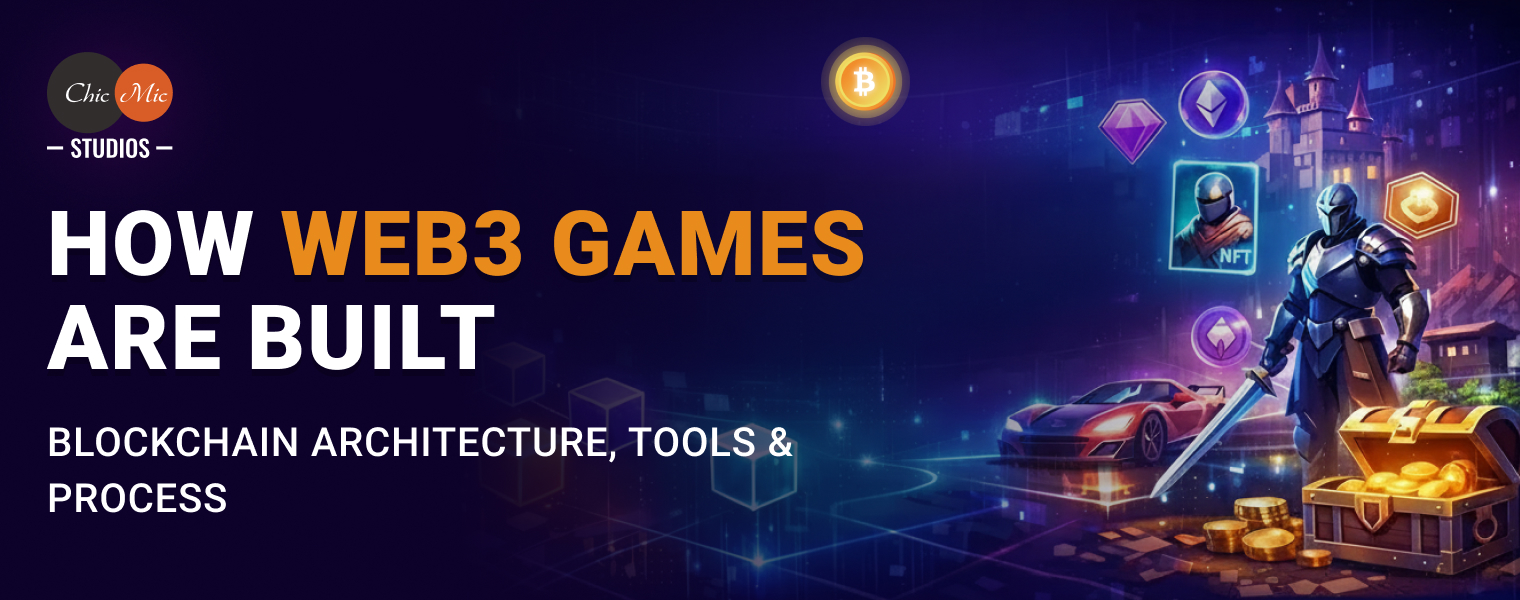
The gaming industry is undergoing a fundamental transformation with the rise of Web3 games. Unlike traditional games where assets, progression, and economies are controlled by centralized servers, Web3 games introduce player ownership, decentralized economies, and transparent on-chain mechanics powered by blockchain technology. As play-to-earn, NFT gaming, and decentralized virtual worlds gain traction, businesses and game studios are increasingly exploring Web3 game development to build sustainable, community-driven gaming ecosystems. In this guide, we break down how Web3 games are built, covering blockchain architecture, development tools, and the complete production process—based on real-world engineering practices followed by ChicMic Studios.
What Are Web3 Games?
Web3 games are blockchain-powered games that give players true ownership of in-game assets through NFTs, tokens, and smart contracts. These games operate on decentralized networks, enabling transparent economies, trustless gameplay mechanics, and community-driven governance.
Unlike Web2 games, where assets are locked within centralized databases, Web3 games allow players to trade, sell, or use assets across platforms, creating open gaming ecosystems.
Key characteristics of Web3 games include:
- NFT-based in-game assets
- Tokenized game economies
- Smart contract-driven logic
- Player-owned progression and rewards
- Decentralized marketplaces
Why Web3 Games Are Gaining Massive Adoption
Web3 games are gaining widespread adoption because they redefine how value is created and shared in gaming ecosystems. By enabling play-to-earn models, NFT ownership, and decentralized marketplaces, Web3 games incentivize long-term player participation and community growth.
From a business perspective, Web3 games unlock:
- New monetization models (NFTs, tokens, royalties)
- Community-driven growth
- Transparent and auditable economies
- Interoperability across platforms
For studios and brands, investing in Web3 game development enables long-term engagement and sustainable revenue models beyond traditional in-app purchases.
👉 Partner with ChicMic Studios for end-to-end Web3 game development
Blockchain Architecture Behind Web3 Games
The blockchain architecture of Web3 games is designed to balance decentralization with performance. A well-structured architecture ensures secure asset ownership, scalable gameplay, and seamless interaction between on-chain and off-chain systems.
On-Chain vs Off-Chain Architecture
Not all game data is stored on the blockchain.
- On-chain components: NFTs, tokens, ownership records, smart contracts
- Off-chain components: Gameplay logic, graphics, physics, matchmaking
This hybrid architecture balances performance and decentralization, ensuring smooth gameplay while maintaining trustless ownership.
Smart Contracts in Web3 Games
Smart contracts define the core logic of Web3 games.
They handle:
- NFT minting and ownership
- Token rewards and economics
- Marketplace transactions
- Game rules and validations
Secure smart contract development is critical, as vulnerabilities can impact player assets and trust.
Internal link suggestion:
NFT & Token Layer
Web3 games rely heavily on:
- NFTs for characters, skins, weapons, land, and collectibles
- Fungible tokens for rewards, governance, and in-game currencies
Tokenomics design plays a crucial role in maintaining a healthy in-game economy and long-term sustainability.
Tools & Technologies Used to Build Web3 Games
Web3 game development requires a specialized technology stack that combines game engines, blockchain platforms, smart contract frameworks, and wallet integrations. These tools enable developers to build immersive gameplay experiences while securely connecting them to decentralized networks. Selecting the right tools directly impacts scalability, transaction costs, and overall player experience.
Game Engines
- Unity (most common for Web3 games)
- Unreal Engine (high-end graphics)
Unity is often paired with blockchain SDKs to integrate smart contracts and wallets seamlessly.
Blockchain Platforms
Popular blockchains used for Web3 games include:
- Ethereum (security & ecosystem)
- Polygon (low gas fees)
- Solana (high throughput)
- BNB Chain
The choice depends on scalability, transaction costs, and target audience.
Development Tools & SDKs
- Solidity / Rust for smart contracts
- Hardhat, Foundry for contract testing
- Web3.js, Ethers.js for blockchain interactions
- Wallet integrations (MetaMask, WalletConnect)
👉 Launch a future-ready decentralized gaming ecosystem
The Web3 Game Development Process
Building a successful Web3 game involves a structured development process that goes beyond traditional game creation. From concept and tokenomics design to smart contract development and blockchain integration, each phase must be carefully planned. A well-defined Web3 game development process ensures economic sustainability, security, and long-term scalability of the game ecosystem.
Game Concept & Tokenomics Design
Every Web3 game starts with:
- Core gameplay mechanics
- NFT utility and rarity models
- Token supply, rewards, and sinks
- Economic sustainability planning
Poor tokenomics is one of the main reasons Web3 games fail—this phase is critical.
Blockchain & Smart Contract Development
Once the economy is defined:
- Smart contracts are written for NFTs, tokens, and gameplay logic
- Contracts are tested and audited
- Gas optimization is performed
Security and efficiency are prioritized to protect player assets.
Game Development & Blockchain Integration
During this phase:
- Gameplay is built using Unity or Unreal
- Blockchain interactions are integrated
- Wallet connectivity is implemented
- On-chain and off-chain systems are synchronized
This ensures seamless gameplay without disrupting user experience.
Testing, Security Audits & Launch
Before launch:
- Smart contracts undergo audits
- Gameplay stress testing is conducted
- Testnet deployments are validated
- Mainnet release is planned
Post-launch monitoring is essential to ensure stability and fairness.
Challenges in Web3 Game Development
Web3 game development comes with unique challenges:
- Scalability and transaction fees
- Security vulnerabilities
- Regulatory uncertainty
- Player onboarding complexity
An experienced Web3 game development company helps mitigate these risks through architecture planning and best practices.
👉 Get expert guidance on blockchain architecture and tokenomics
How ChicMic Studios Builds Scalable Web3 Games
ChicMic Studios follows a production-ready approach to Web3 game development, focusing on scalability, security, and long-term success. By combining blockchain engineering, game development expertise, and tokenomics design, ChicMic Studios builds Web3 games that are production-ready rather than experimental.
Their expertise includes:
- Web3 game architecture design
- Smart contract and token development
- Unity-based blockchain game integration
- NFT marketplaces and in-game economies
- Post-launch support and optimization
FAQs – Web3 Games Development
What are Web3 games?
Web3 games are blockchain-powered games that use NFTs, tokens, and smart contracts to give players ownership of in-game assets and decentralized economies.
How are Web3 games different from traditional games?
Traditional games are centralized, while Web3 games are decentralized, transparent, and allow players to trade or own assets outside the game.
Which blockchain is best for Web3 games?
Ethereum, Polygon, Solana, and BNB Chain are commonly used, depending on scalability, cost, and performance requirements.
Are Web3 games secure?
Yes, when built with audited smart contracts and secure architectures. Security audits are essential for protecting player assets.
How long does it take to build a Web3 game?
A Web3 game typically takes 4–9 months, depending on complexity, blockchain integration, and gameplay depth.
Concluding Note
Web3 games represent the future of interactive entertainment, combining blockchain transparency with immersive gameplay and player-driven economies. However, building a successful Web3 game requires more than just NFTs and tokens—it demands robust blockchain architecture, well-designed tokenomics, secure smart contracts, and seamless game integration. ChicMic Studios brings together blockchain engineering, game development expertise, and real-world production experience to help studios and businesses build scalable, secure, and engaging Web3 games. Whether you’re launching a play-to-earn game, NFT-based ecosystem, or decentralized virtual world, partnering with the right development team ensures long-term success.